CV Lies in Background Checks: 7 Warning Signs Employers in Kenya Should Know
CV lies in background checks can reveal important discrepancies that employers might otherwise overlook during recruitment. From exaggerated job titles and incorrect employment dates to falsified academic qualifications, misleading information on a CV can expose organizations to financial, operational, and reputational risks.
In Kenya, employers increasingly rely on independent background verification to confirm that candidates possess the qualifications, experience, and professional credentials they claim.
However, not every discrepancy is evidence of fraud. Some differences arise from administrative errors, incomplete records, or misunderstandings. The objective of professional screening is to establish accurate facts and give employers the information they need to make fair hiring decisions.
Understanding CV lies in background checks helps Kenyan employers identify misleading claims early and make recruitment decisions based on verified information.

What Are CV Lies in Background Checks?
CV misrepresentation occurs when a candidate provides false, exaggerated, or misleading information about their qualifications, work experience, employment history, or professional achievements.
CV lies in background checks are identified when independent verification produces credible evidence that materially contradicts information supplied by a candidate.
Misrepresentation can range from relatively minor exaggerations to serious concerns involving forged certificates, fabricated employers, or false professional licenses.
The significance of a discrepancy depends on its nature, supporting evidence, and relevance to the position.
7 Common CV Lies Uncovered During Background Checks
These examples demonstrate how CV lies in background checks can range from exaggerated responsibilities to serious misrepresentation of academic and professional credentials.
1. Falsified Academic Qualifications
Some candidates claim qualifications they have not earned, alter academic transcripts, or present certificates that cannot be authenticated.
Education verification involves confirming academic records directly with issuing institutions or other appropriate official sources.
Employers should also establish whether an institution or qualification is appropriately recognized.
2. Exaggerated Job Titles and Responsibilities
A candidate may describe a previous position as managerial despite having held a junior or supporting role.
Other applicants may exaggerate supervisory responsibilities, budgets managed, or projects delivered.
Employment verification helps employers distinguish between a candidate’s official position and their actual responsibilities.
3. Incorrect Employment Dates
Some CVs contain employment dates that do not match official records.
For example, an applicant may claim to have worked for three years when the verified employment period was substantially shorter.
Although date differences may reflect genuine errors, material inconsistencies should be investigated and clarified before conclusions are reached.
4. Fabricated Employment History
One of the more serious forms of misrepresentation involves claiming employment with an organization where the candidate never worked.
Independent verification can help establish whether the employer exists and whether reliable records support the claimed employment relationship.
A company being closed or difficult to contact does not automatically mean the employment claim is false.
5. Fake Professional References
Some candidates provide personal contacts who present themselves as former supervisors or HR representatives.
Professional reference verification should establish the referee’s identity, position, and relationship to the candidate before relying on their statements.
Where appropriate, contact details should be independently confirmed through official organizational channels.
6. Misrepresented Professional Licenses
Certain positions require registration, licensing, or membership with recognized professional bodies.
Candidates may claim active membership despite an expired registration or provide inaccurate licensing details.
Employers should verify the status of relevant credentials directly with the issuing authority or professional body.
7. Exaggerated Skills and Achievements
Applicants sometimes overstate technical expertise, leadership experience, language proficiency, or project accomplishments.
Not all skills can be verified through document checks alone.
Employers may need to combine background verification with practical assessments, structured interviews, and work samples.
Why Do Candidates Misrepresent Information on Their CVs?
Several factors may contribute to CV misrepresentation.
Competitive recruitment environments: Candidates may feel pressure to stand out from other applicants.
Minimum experience requirements: Applicants may exaggerate employment periods to satisfy advertised thresholds.
Salary expectations: Some candidates may overstate previous responsibilities to qualify for higher-paying positions.
Perceived low verification risk: Applicants may assume employers will not independently confirm their claims.
These explanations do not excuse dishonesty, but they help employers understand why consistent verification procedures matter.
How Background Checks Reveal CV Lies in Kenya
Identifying CV lies in background checks requires independent confirmation of employment records, academic qualifications, professional references, and other relevant candidate information.
Professional screening uses multiple verification methods to establish whether a candidate’s claims are supported by reliable evidence.
Employment History Verification
Previous employers may be contacted through verified official channels to confirm employment dates, job titles, and other information they are authorized to disclose.
Read our guide on Employment Verification in Kenya.
Education Verification
Academic qualifications can be checked directly with issuing institutions, while recognition and accreditation questions may require consultation with relevant authorities.
The Kenya National Qualifications Authority provides information about Kenya’s qualifications framework.
Professional Reference Verification
References can be assessed through structured questions and independent confirmation of the referee’s professional relationship with the candidate.
Identity and Professional Credential Checks
Identity information and role-specific professional registrations may be verified through appropriate official sources, subject to applicable legal requirements.
Together, these methods help employers distinguish verified facts from unsupported claims.
Why CV Discrepancies Should Not Automatically Be Treated as Fraud
Discovering CV lies in background checks requires careful evaluation of the available evidence.
An inconsistency does not necessarily establish intentional deception.
For example, a candidate may have used a functional job title instead of the official HR designation. Employment dates may differ because of payroll cutoffs, contract extensions, or incomplete historical records.
A responsible screening process should:
- Record the discrepancy accurately.
- Identify the source of the information.
- Seek additional confirmation where necessary.
- Give the candidate an appropriate opportunity to explain.
- Distinguish confirmed adverse findings from unresolved discrepancies.
This approach supports fair and defensible recruitment decisions.
Legal and Data Protection Considerations in Kenya
Background screening involves the collection and processing of personal information.
Under Kenya’s Data Protection Act, 2019, employers and screening providers must comply with applicable requirements concerning lawful processing, transparency, purpose limitation, security, and individual rights.
Organizations should establish an appropriate lawful basis for each screening activity, provide relevant privacy information, and obtain valid consent where consent is the basis relied upon.
The Office of the Data Protection Commissioner provides official information about Kenya’s data protection framework.
Employers should also restrict access to verification reports and retain personal information only for as long as there is a lawful reason to do so.
How Employers Can Prevent CV Misrepresentation
Employers can reduce recruitment risks by introducing consistent screening procedures.
Verify important claims: Prioritize qualifications, employment experience, and credentials that are essential to the position.
Screen consistently: Apply relevant verification requirements fairly across comparable candidates.
Use independent sources: Avoid relying exclusively on documents or contact details provided by applicants.
Document findings: Maintain clear records of verified information, unresolved discrepancies, and decisions.
Protect candidate information: Apply appropriate confidentiality and data protection safeguards.
Engage professional screening providers: Independent verification can reduce the administrative burden on internal HR teams.
For additional information, see our article on Background Checks in Employment.
How Semafacts Helps Employers Identify CV Discrepancies
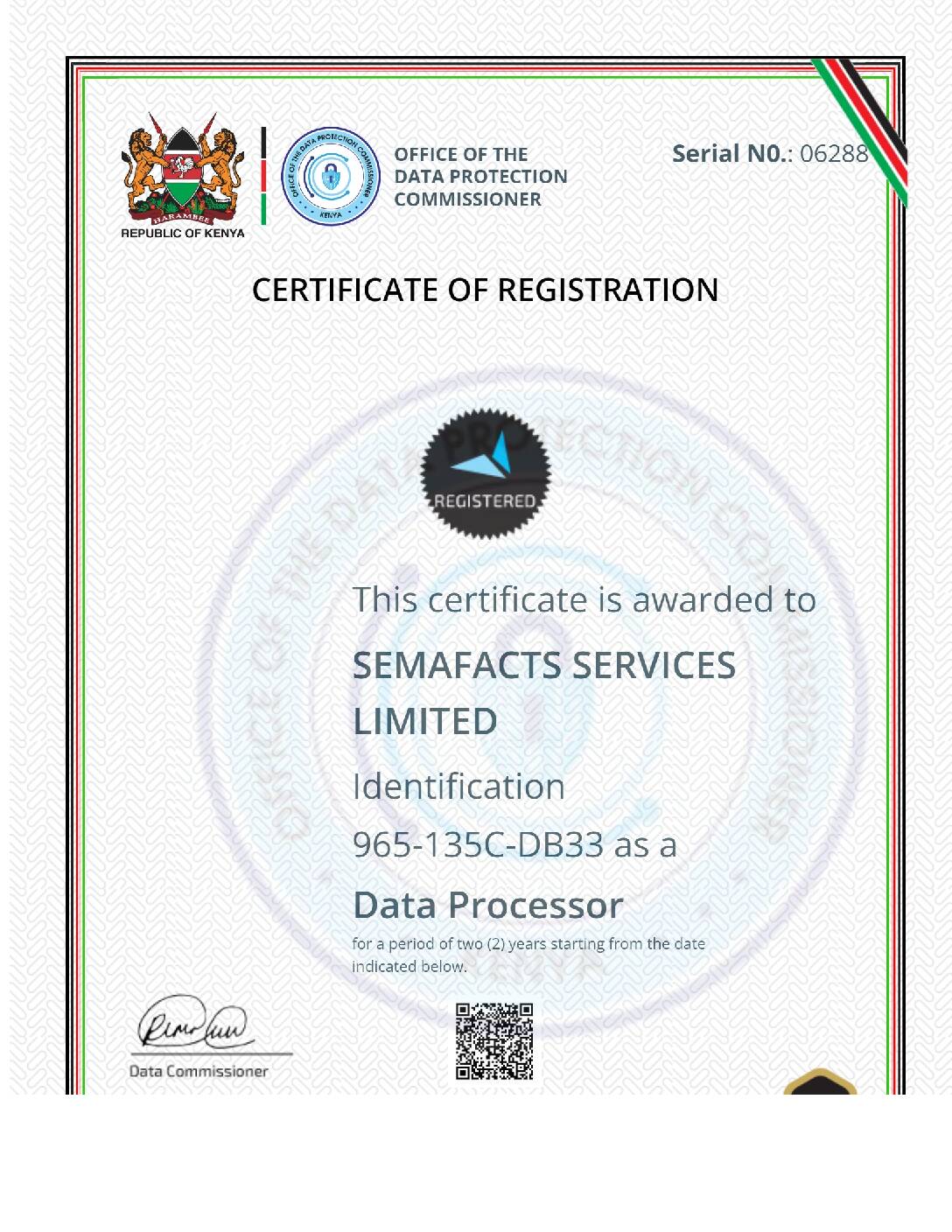
Semafacts Services Limited provides professional background screening and verification services for employers in Kenya and other African markets.
Our services include employment history verification, education verification, professional reference checks, identity verification, and other relevant screening activities.
We focus on obtaining reliable information from credible sources and documenting findings to support informed recruitment decisions.
Our approach recognizes an important distinction: a candidate whose records require clarification should not automatically be treated the same as a candidate whose claims have been demonstrably falsified.
By combining structured verification procedures with clear reporting, Semafacts helps employers identify material discrepancies and better understand recruitment risks.
Frequently Asked Questions
Can Background Checks Detect Fake CVs in Kenya?
Background checks can identify false or unsupported claims when reliable records and verification sources are available. However, no screening process guarantees detection of every misrepresentation.
What Are the Most Common CV Lies?
Common examples include exaggerated job titles, incorrect employment dates, falsified qualifications, fabricated work experience, and misleading professional references.
Is Lying on a CV Illegal in Kenya?
The legal consequences depend on the conduct involved. Forgery, impersonation, or other fraudulent activities may carry legal consequences. Employment-related consequences depend on the facts, applicable law, and contractual arrangements.
How Long Do Employment Background Checks Take?
Turnaround times depend on the checks requested, the availability of records, and the responsiveness of institutions and previous employers.
What Should Employers Do When a CV Discrepancy Is Found?
Employers should assess the evidence, determine whether the inconsistency is material, seek clarification where appropriate, and follow a fair decision-making process.
Conclusion: Verify Before You Hire
CV lies in background checks can expose serious inconsistencies, but responsible verification is about more than identifying dishonesty. It is about establishing facts, protecting organizations, and treating candidates fairly.
Employers who adopt consistent screening procedures are better positioned to make informed recruitment decisions and reduce preventable hiring risks.
Need to verify a candidate’s employment history, qualifications, or professional references?
Contact Semafacts Services Limited for professional background screening services in Kenya.
Email: info@semafacts.com
Request Background Verification Services
Better hiring decisions begin with verified information.