Background Checks in Employment: 7 Essential Benefits for Safer Hiring
Background checks in employment help organizations make informed hiring decisions by verifying candidates’ professional histories, qualifications, and other relevant information before recruitment decisions are finalized.
In Kenya, employers increasingly need reliable ways to distinguish between information provided by applicants and facts confirmed through independent sources.
A strong CV and an impressive interview can create a positive first impression. However, neither guarantees that every claim made by a candidate is accurate.
At Semafacts Services Limited, we help employers strengthen their recruitment processes through professional, confidential, and evidence-based background screening.
For Kenyan employers, background checks in employment provide an additional layer of assurance by confirming important candidate information before hiring decisions are made.

What Are Background Checks in Employment?
Background checks in employment involve reviewing and verifying information supplied by a job applicant to determine whether it is accurate, relevant, and supported by credible evidence.
Depending on the position, checks may cover previous employment, educational qualifications, professional licenses, references, identity, and other legally permissible information.
Employment verification is a particularly important component because it helps confirm where a candidate worked, the position held, and their period of employment.
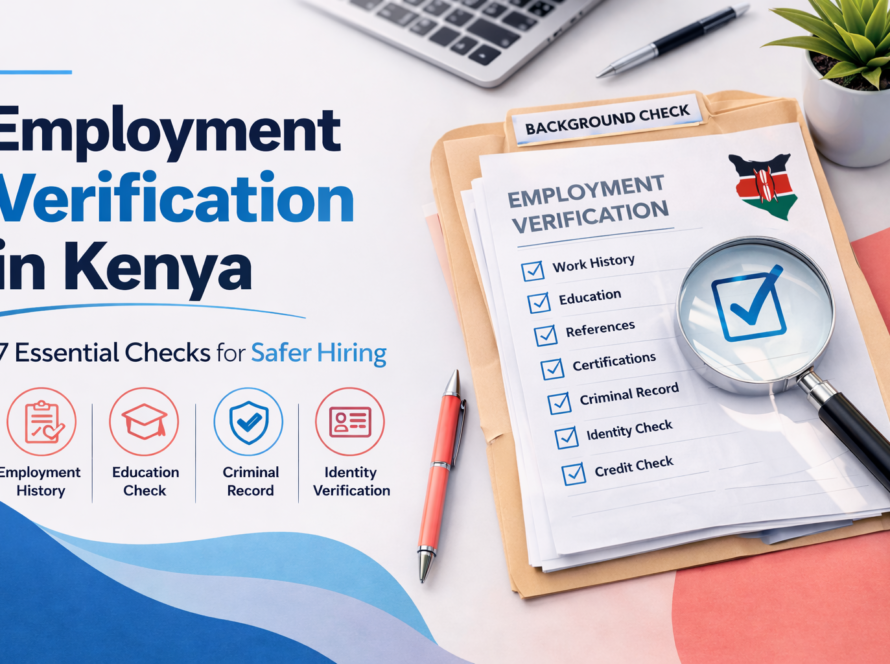
For a detailed explanation, read our guide on Employment Verification in Kenya: 7 Essential Checks for Safer Hiring.
7 Essential Benefits of Background Checks in Employment
1. Detect Misrepresented Employment History
Candidates may unintentionally provide incorrect dates or deliberately exaggerate job titles, responsibilities, or experience.
Employment history verification helps employers identify discrepancies by confirming information through previous employers and appropriate official channels.
Importantly, not every discrepancy indicates dishonesty. Differences should be reviewed carefully, and candidates should have an opportunity to clarify relevant findings.
2. Improve the Quality of Hiring Decisions
Recruitment decisions should reflect both a candidate’s potential and their verified professional background.
By confirming qualifications and experience, employers gain greater confidence that applicants meet the requirements of their intended positions.
This is especially important for management, technical, financial, and other positions requiring specific competencies.
3. Reduce Recruitment and Operational Risks
An unsuitable hire can result in additional recruitment expenses, workplace disruption, training costs, and reputational concerns.
Pre-employment screening helps organizations identify relevant risks before making final decisions.
Although no verification process can eliminate every hiring risk, structured checks provide a stronger foundation for recruitment.
By incorporating background checks in employment into the recruitment process, organizations can identify inconsistencies early and reduce the likelihood of costly hiring mistakes.
4. Verify Academic and Professional Qualifications
Some positions require specific academic qualifications, professional memberships, or licenses.
Employers should confirm that the issuing institution is legitimate and that the candidate obtained the stated qualification.
The Kenya National Qualifications Authority provides resources supporting the authentication and recognition of qualifications.
Independent verification is especially valuable for roles requiring specialized technical knowledge or professional accreditation.
5. Strengthen Workplace Trust and Accountability
A consistent screening policy communicates that an organization values integrity, transparency, and responsible recruitment.
It also helps establish fair procedures for assessing applicants against job-related requirements.
When screening is conducted consistently and proportionately, employers can strengthen accountability without unfairly disadvantaging candidates.
6. Support Data Protection and Responsible Recruitment
Background screening involves processing personal information and must be conducted with appropriate safeguards.
In Kenya, employers should consider their obligations under the Data Protection Act, 2019, including transparency, lawful processing, data minimization, and security.
The Office of the Data Protection Commissioner provides information about Kenya’s data protection framework.
Organizations should inform candidates about relevant checks, obtain appropriate authorization where required, and protect verification records against unauthorized access.
7. Reduce Long-Term Hiring Costs
Replacing an unsuitable employee can require additional advertising, interviews, onboarding, training, and management time.
By identifying material discrepancies early, employers can avoid some preventable recruitment costs.
A structured verification process is therefore an investment in better hiring decisions rather than simply another administrative expense.
What Information Should Employers Verify?
The appropriate screening package depends on the responsibilities and risks associated with the position.
Common checks include:
- Employment history verification: Confirming previous employers, job titles, and employment dates.
- Professional reference checks: Obtaining relevant feedback from genuine professional referees.
- Education verification: Confirming academic awards and attendance records.
- Professional certification checks: Validating licenses, registrations, and memberships.
- Identity verification: Confirming that candidate identity information is accurate.
- Criminal background checks: Conducted only where lawful, necessary, and relevant to the position.
- Credit checks: Considered for appropriate roles where there is a lawful and proportionate justification.
Not every candidate needs every check. Screening should be tailored to the position and applicable legal requirements.
Common Challenges Employers Face in Kenya
Employment screening can be complicated by several practical issues.
Delayed responses from previous employers: Some organizations take considerable time to respond to verification requests.
Incomplete employment records: Candidates may have worked in organizations with limited recordkeeping systems.
Unreliable referees: Personal contacts may be presented as former supervisors or HR representatives.
Inconsistent information: Dates, job titles, or institutional records may differ from the information supplied in applications.
These challenges highlight the importance of documented verification procedures, independent source confirmation, and clear communication with candidates.
Why Choose Semafacts for Employment Background Checks?
Semafacts Services Limited provides professional background screening and verification services to organizations recruiting in Kenya and other African markets.
Our approach emphasizes accuracy, confidentiality, transparent reporting, and verification through credible sources.
We support employers through employment history checks, education and professional qualification verification, reference checks, identity verification, and other relevant screening services.
Our verification process helps organizations:
- Identify and resolve discrepancies before hiring.
- Access documented verification findings.
- Reduce the administrative burden on HR teams.
- Monitor verification progress.
- Make decisions supported by reliable information.
Whether your organization is screening one candidate or coordinating multiple recruitment assignments, Semafacts can help structure an appropriate verification process.
Semafacts supports organizations conducting background checks in employment by providing independent verification, documented findings, and clear reporting to support informed hiring decisions.
Frequently Asked Questions
Are Background Checks Legal in Kenya?
Background checks can be conducted in Kenya when they comply with applicable laws, including data protection requirements. Employers should establish a lawful basis, provide appropriate information to candidates, and ensure that checks are relevant and proportionate.
How Long Does Employment Background Screening Take?
Turnaround time depends on the scope of verification, the availability of records, and the responsiveness of previous employers or institutions. Some checks may be completed quickly, while others require additional follow-up.
Can an Employer Conduct Background Checks Before Hiring?
Yes, employers can incorporate lawful and appropriately authorized screening into their pre-employment recruitment process.
What Happens When a Discrepancy Is Found?
A discrepancy should be assessed according to its nature, significance, and supporting evidence. Employers should avoid automatically treating every inconsistency as fraud and should allow appropriate clarification.
Request Employment Background Verification from Semafacts
Hiring decisions are too important to rely on assumptions alone.
Investing in professional background checks in employment helps organizations build trustworthy teams, protect their operations, and make recruitment decisions with greater confidence.
At Semafacts, we help organizations confirm candidate information, identify material discrepancies, and strengthen their recruitment processes.
Ready to verify your next hire?
Contact Semafacts Services Limited to discuss your screening requirements and request a quotation.
Email: info@semafacts.com
Website: https://semafacts.com/
Make informed hiring decisions. Verify before you hire.