Employment Background Checks: 7 Essential Benefits for Employers in Kenya
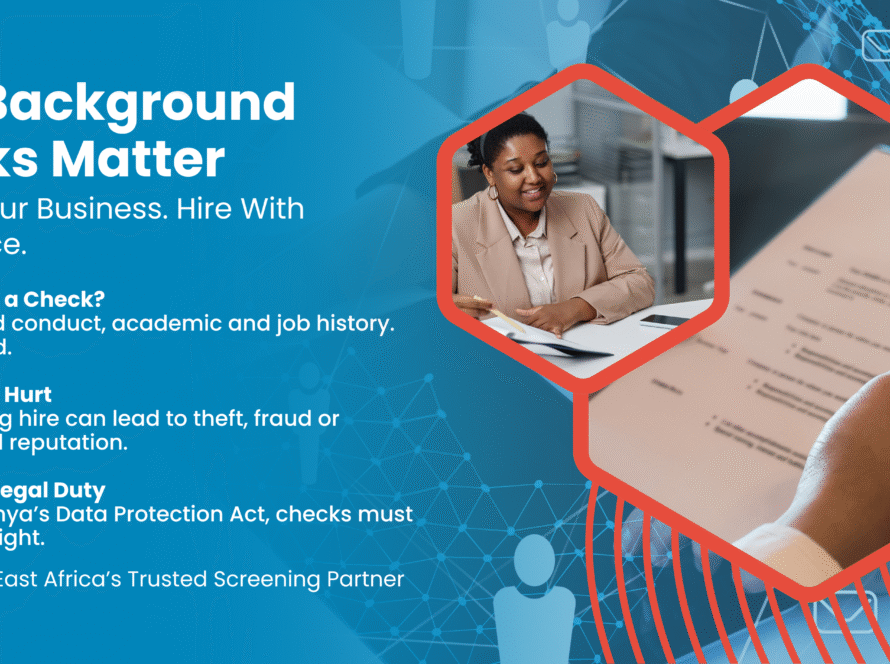
Employment background checks help organizations make informed hiring decisions by verifying important information about prospective employees. In Kenya’s competitive recruitment environment, employers need reliable ways to confirm academic qualifications, employment history, professional references, and other credentials relevant to a position.
A well-written CV and a successful interview provide valuable information, but they do not independently establish that every claim made by a candidate is accurate.
At Semafacts Services Limited, we support organizations with professional background verification services designed to identify material discrepancies, reduce recruitment risks, and strengthen hiring decisions.
What Are Employment Background Checks?
Employment background checks are verification procedures conducted to confirm information supplied by job applicants or employees.
Depending on the role, these checks may include:
- Previous employment history and job titles.
- Academic qualifications and professional certificates.
- Professional references.
- Identity information.
- Professional registration and licensing.
- Criminal record checks, where lawful and relevant.
- Credit checks for appropriate roles, subject to applicable requirements.
The purpose of employment background checks is not simply to uncover negative information. It is to establish reliable facts and help employers assess candidates fairly.
7 Essential Benefits of Employment Background Checks
1. Verify Candidate Qualifications and Experience
One of the main benefits of employment background checks is confirming whether candidates possess the qualifications and experience they claim.
For example, a candidate may list a university degree, professional certification, or previous management position on their CV.
Independent verification helps employers determine whether these claims are supported by credible institutional and employment records.
Read more about Employment Verification in Kenya.
2. Identify CV Misrepresentation and Material Discrepancies
Some candidates exaggerate employment responsibilities, misstate job titles, or provide incorrect academic information.
Employment background checks can reveal discrepancies between candidate declarations and verified records.
However, an inconsistency should not automatically be classified as fraud. Differences may arise from administrative errors, incomplete records, or misunderstandings.
Employers should assess findings carefully and seek clarification where appropriate.
Learn more about CV Lies in Background Checks.
3. Reduce the Cost of Poor Hiring Decisions
Recruiting and onboarding employees requires time and financial resources.
When an employee lacks qualifications essential to the role, organizations may face additional training expenses, performance difficulties, or replacement recruitment costs.
Employment background checks can help identify relevant concerns before a final hiring decision is made.
Although screening cannot guarantee a successful hire, it provides additional evidence to support recruitment decisions.
4. Strengthen Workplace Safety and Risk Management
Certain roles involve access to sensitive information, vulnerable individuals, valuable assets, or safety-critical equipment.
For these positions, appropriately selected employment background checks may help employers assess risks relevant to the job.
Screening requirements should be proportionate and based on legitimate responsibilities rather than applied indiscriminately.
5. Protect Organizational Reputation
Employees represent their organizations when interacting with customers, suppliers, colleagues, and other stakeholders.
Hiring individuals who have materially misrepresented qualifications or professional credentials can expose an organization to reputational and operational concerns.
A structured verification process demonstrates a commitment to due diligence and responsible recruitment.
6. Improve Recruitment Consistency and Fairness
Employment background checks can support fairer recruitment when employers apply consistent, job-relevant screening criteria.
A documented process helps ensure that candidates are assessed against comparable standards and that verification findings are considered objectively.
Importantly, candidates should have an appropriate opportunity to explain discrepancies before employers draw adverse conclusions.
7. Support Compliance and Responsible Hiring
Employers in regulated sectors may need to confirm professional registrations, licenses, or other mandatory credentials.
Employment background checks can help establish whether candidates satisfy relevant requirements.
Screening must also comply with applicable privacy, employment, and other legal obligations.
In Kenya, organizations should consider the requirements of the Data Protection Act, 2019, including lawful processing, transparency, security, and data minimization.
The Office of the Data Protection Commissioner provides official guidance on Kenya’s data protection framework.
How Employment Background Checks Work in Kenya
A professional screening process typically involves several stages.
Step 1: Determine the required checks. The employer identifies verification activities appropriate to the position.
Step 2: Collect candidate information. Relevant documents and details are obtained, together with appropriate privacy information and authorization procedures.
Step 3: Identify official verification sources. Previous employers, academic institutions, and professional bodies are identified through reliable channels.
Step 4: Conduct verification. The screening provider contacts appropriate sources and confirms information where records are available.
Step 5: Review findings. Verified information, material discrepancies, and unresolved issues are documented.
Step 6: Report the results. The employer receives a structured report to support an informed hiring decision.
The duration of employment background checks depends on the checks requested, the availability of records, and the responsiveness of verification sources.
When Should Employers Conduct Employment Background Checks?
Employers may conduct employment background checks during the recruitment process, typically before finalizing an appointment and in accordance with applicable law.
Screening may be particularly valuable for positions involving financial responsibility, access to confidential information, specialized professional qualifications, or significant operational responsibilities.
Organizations should establish clear policies explaining which checks apply to different roles and how verification findings influence hiring decisions.
Choosing a Background Screening Provider in Kenya
When selecting a screening partner, employers should consider the provider’s verification methods, data protection practices, reporting quality, and ability to communicate clearly about outstanding checks.
A reliable provider should distinguish between confirmed findings and information that remains unresolved.
Employers should also ask how candidate information is collected, stored, accessed, and retained.
How Semafacts Supports Employment Background Checks
Semafacts Services Limited provides professional background verification services for employers recruiting in Kenya and other African markets.
Our services include employment history verification, education verification, professional reference checks, identity verification, and other relevant screening activities.
We focus on independent source verification, accurate documentation, confidentiality, and clear reporting.
Our approach recognizes that a discrepancy requiring clarification is different from a claim that has been demonstrably falsified.
By working with Semafacts, employers can access structured screening support and information to strengthen their recruitment decisions.
Frequently Asked Questions
Are Employment Background Checks Legal in Kenya?
Yes. Employers may conduct appropriate background screening provided they comply with applicable laws, establish a lawful basis for processing personal information, and use proportionate verification procedures.
How Long Do Employment Background Checks Take?
Turnaround times vary according to the number of checks, availability of records, and responsiveness of institutions or previous employers.
Can Employment Background Checks Detect Fake Certificates?
Academic verification can identify unsupported or falsified qualifications when reliable records are available from issuing institutions or other appropriate sources.
Do All Candidates Need the Same Background Checks?
Not necessarily. Screening requirements should reflect the position’s responsibilities, relevant risks, and applicable legal obligations.
What Happens When a Discrepancy Is Identified?
Employers should assess the evidence, seek clarification where appropriate, and make a fair decision based on the significance and reliability of the findings.
Conclusion: Make Better Hiring Decisions with Employment Background Checks
Employment background checks are an important part of responsible recruitment. They help employers verify qualifications, identify material discrepancies, reduce avoidable hiring risks, and make decisions supported by reliable information.
For organizations in Kenya, working with a professional screening provider can make verification more structured, consistent, and transparent.
Request Employment Background Checks from Semafacts
Semafacts Services Limited helps employers verify candidate credentials and strengthen their recruitment processes.
Contact our team to discuss your screening requirements and request a quotation.
Email: info@semafacts.com
Website: https://semafacts.com/
Verify candidates. Reduce recruitment risks. Hire with confidence.